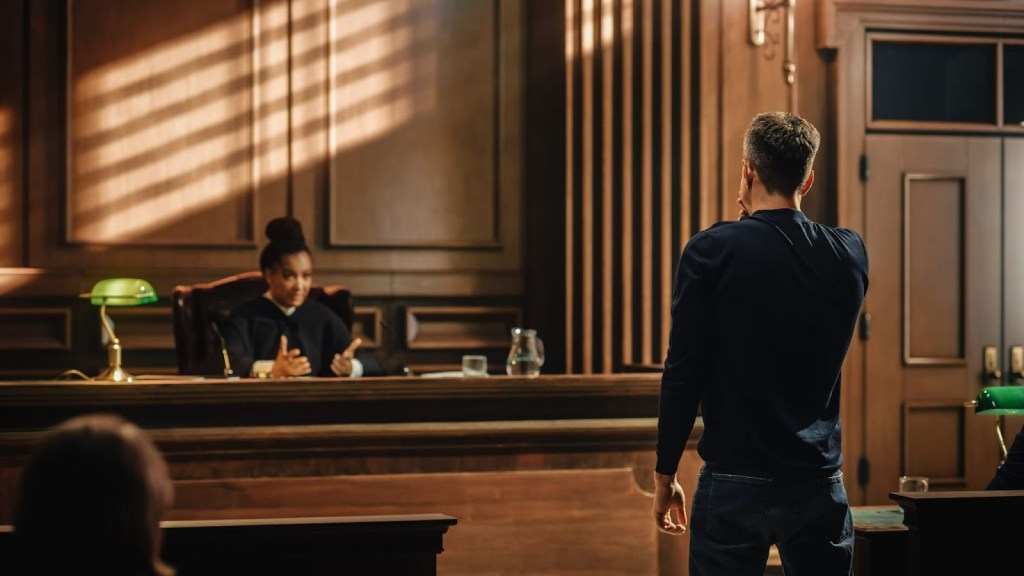
Along with civil law, one of the subjects that each one students study in regulation college is criminal regulation. Civil and criminal regulation fluctuate substantially; some college students choose the sphere of civil law while others gravitate towards criminal law. Whether or not they come to be civil legal professionals or criminal expert traffic lawyer in newcastle attorneys of their prison careers, understanding the principles of crook and civil regulation is extraordinarily crucial. In this newsletter, the focal point is on criminal law.
What is Criminal Law?
Criminal law is the body of law that defines behavior perceived as threatening to, dangerous to, or in any other case endangering the belongings, fitness, safety, and welfare of people. Within the area of crook law, there are numerous exceptional styles of crimes, each with their own set of punishments.
Some not unusual varieties of crimes consist of murder, attack, battery, theft, arson, drug offenses, fraud, rape, and sexual abuse. It’s additionally worth noting that even as maximum crimes are offenses towards other people or society in wellknown, offenses in opposition to oneself are considered a criminal act as properly. So suicide and attempted suicide are both crook offenses.
Where Does Criminal Law Come From?
Most criminal legal guidelines are set up through statute, that is to mention that the laws are enacted through a legislature. In the USA, the federal authorities and each nation have their own crook codes, which define specific crimes and the one of a kind ranges of every crime.The precise penalties for every degree of crime vary from jurisdiction to jurisdiction. Federal criminal law stands by myself from each character country’s criminal law.
Criminal Law Definition: Levels of Crime
Generally, crook law is defined with the aid of statutes with crimes categorized primarily based at the severity of crimes. Within the prison gadget, the maximum extreme infringements of criminal law are felonies, accompanied via misdemeanors, and then infractions.
Felonies are the maximum extreme crimes. They are punishable by means of imprisonment in nation prison, or in a few cases, by using death. Examples include murder, theft, rape, arson, and drug trafficking.
Misdemeanors are less severe than felonies. They are punishable through imprisonment in county prison, or via a great. Examples consist of sure minor offenses which includes theft, vandalism, certain belongings crimes, and disorderly behavior.
Infractions or citations are even less severe crimes. They are punishable by way of a quality, but no longer with the aid of imprisonment. Examples encompass minor site visitors violations, jaywalking, littering, public sickness and, other less extreme offenses.
Within each crime, there are also frequently ranges that taxonomize severity. The diploma of against the law is determined by means of various of things, together with the severity of the damage precipitated (which includes personal harm), the intent of the perpetrator, and the culprit’s criminal history.
For instance, first-degree murder is the maximum serious stage because it implies purpose and premeditation. However, second-degree homicide does no longer require a showing of premeditation and may be installed by in reality showing malice or reckless push aside for the lives of the sufferers.
Punishment and Rehabilitation
Criminal law also includes the punishment and rehabilitation of folks that violate such legal guidelines. I even have written previously about the differences among retributive and rehabilitative in crook law gadget and justice philosophies.
Criminal law varies consistent with jurisdiction, and differs from civil law, wherein emphasis is more on dispute resolution and sufferer repayment as opposed to on punishment or rehabilitation. Criminal system is a formalized reliable hobby that requires proving the commission of against the law and meting out punitive or rehabilitative treatment for the wrongdoer.
The Purpose of Criminal Law
The cause of crook regulation is to shield society from harm from crook conduct. Criminal regulation does this by means of deterring people from committing crimes, through punishing those who do dedicate crimes, and by using rehabilitating those who’ve been convicted of crimes.
Who Decides on Criminal Charges?
In civil law, claims are brought through people or entities in opposition to each other, relying on the specifics of the proceedings. In criminal law, charges for severe offenses are always delivered by the country. And so the selection of whether or not or no longer to bring prices in a criminal case is made through a prosecutor.
A prosecutor is an attorney who is accountable for representing the authorities in crook cases. Prosecuting attorneys are commonly elected officers, and that they have the discretion to determine whether or no longer to rate a person with a criminal offense. Many prosecutors in kingdom and municipal offices carry the title of district legal professional.
The choice of whether or not or no longer to bring prices is a critical one. Prosecutors have a tremendous deal of discretion in this vicinity, and that they need to weigh quite a number of factors before you decide. These factors consist of the strength of the evidence, the severity of the crime, the defendant’s criminal records, and the public hobby, such as the desires of the sufferers, if any.
However, as I have written approximately previously, it is important to word that victims do no longer have the very last say over whether or not or not to pursue prices towards an offender. Again, that decision ultimately rests with the prosecutor. So if you’ve ever seen a movie or TV show wherein the sufferer is asked whether they want to press fees, simply keep in mind that their solution (either manner) counts for little more than an opinion in these situations.
The Criminal Process
If a prosecutor does decide to bring costs, they may file a charging file with the court. The charging record will allege that the defendant has committed a crime, and it’s going to specify the costs that the defendant is dealing with. Once the charging document is filed, the defendant will be arraigned. At the arraignment, the defendant will be knowledgeable of the costs that they are going through, and they will enter a plea of responsible, not guilty, or no contest. If the defendant pleads no longer guilty, the case will continue to trial. At trial, the prosecutor will present proof to the jury in an try to show the defendant’s guilt. The defendant may have the opportunity to provide proof of their personal defense.
What is the Evidentiary Standard in Criminal Law?
The evidentiary standard in criminal regulation is proof beyond an inexpensive doubt. This way that the prosecution must prove that the defendant is guilty of the crime beyond any reasonable doubt.The jury must be convinced that the defendant is responsible, and that there may be no different possible explanation for the evidence.
This differs from the evidentiary widespread in civil cases, that’s simply evidence by using a preponderance of the proof – meaning that a celebration must in reality display that their claims or allegations are slightly more likely than now not to be factually accurate so one can prevail. The standard of proof in crook regulation is a very high standard. It is designed to protect the rights of the accused. The wellknown of proof is also designed to make sure that innocent people are not convicted of crimes.
Philosophically, our society considers the perception of an innocent character being punished to be a more injustice than the belief of a guilty person not being held to account. And so our criminal laws and criminal standards of evidence are skewed accordingly in choose of innocence.This is why all criminally accused persons are stated to be “harmless until confirmed guilty” and no longer the other way round.
Who Has the Burden of Proof in Criminal Cases?
In civil cases, the burden of proof is normally shared via plaintiffs and defendants – with plaintiffs having to present proof of legal responsibility and defendants having to give evidence of blamelessness. But in crook cases, the weight of evidence is on the prosecution. The prosecuting legal professional need to prove the defendant’s guilt beyond a reasonable doubt. The protection, however, does not have to show something. The defense can without a doubt increase doubts about the crook prosecution’s case.
Juries in Criminal Cases
Juries in criminal cases will normally consist of 6-12 people. If a jury is not satisfied that the defendant is responsible beyond an inexpensive doubt, then the defendant ought to be acquitted. The defendant can’t be convicted if the jury has any reasonable doubt about the defendant’s guilt. A jury may be asked in a civil case, too.
Jury Unanimity as a Requirement in Criminal Law
In the federal court docket machine and in certainly all nation courts, jury verdicts in crook cases should be unanimous. A hung jury, in which even one juror isn’t satisfied of guilt, could bring about a mistrial and in all likelihood a retrial. This is why the voir dire manner is so essential in trial court cases.
 expert traffic lawyer in newcastle
Leave a comment